What Is Native App Development?
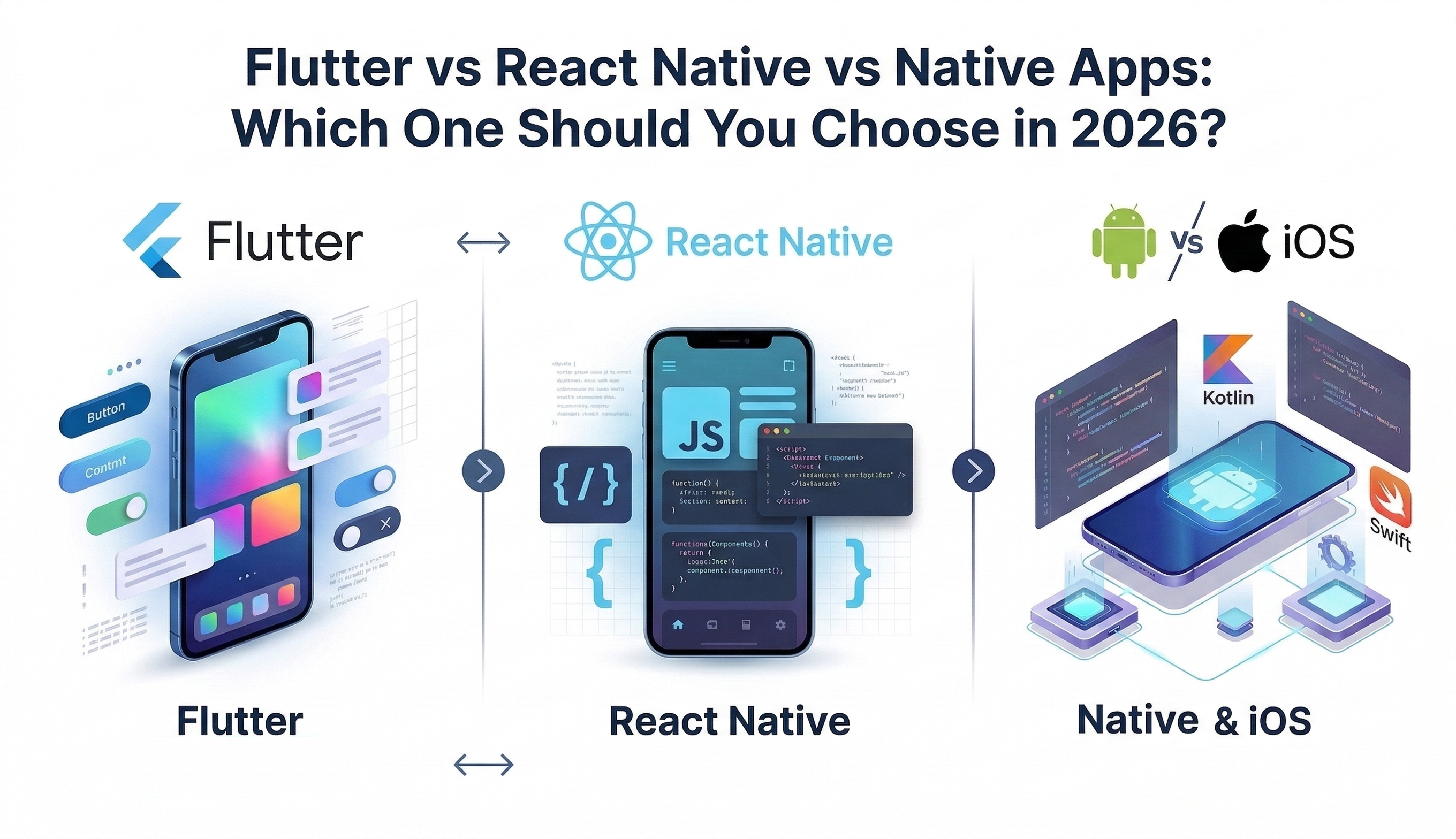
Native app development means building applications specifically for one platform using the official programming languages and tools.
Technologies Used
-
Android: Kotlin / Java
-
iOS: Swift / Objective-C
Native apps are developed using platform-specific SDKs like Android Studio and Xcode.
Advantages of Native Apps
✔ Best performance
✔ Full access to device hardware
✔ Better security
✔ Best UI/UX integration
✔ Ideal for complex applications
Disadvantages
✘ Higher development cost
✘ Separate codebases for Android and iOS
✘ Longer development time
Native apps are usually recommended for high-performance apps like gaming apps, fintech apps, and large-scale platforms.
What Is Flutter?
Flutter is an open-source UI toolkit developed by Google that allows developers to build cross-platform mobile applications using a single codebase.
Flutter uses the Dart programming language and renders UI using its own high-performance engine.
Advantages of Flutter
✔ Single codebase for Android and iOS
✔ Faster development time
✔ Beautiful UI with customizable widgets
✔ Excellent performance close to native
✔ Strong community support
Disadvantages
✘ Larger app size
✘ Limited availability of some native libraries
✘ Dart language has a learning curve
Flutter has become one of the most popular frameworks for startups building MVPs quickly.
What Is React Native?
React Native, developed by Meta (Facebook), allows developers to build mobile applications using JavaScript and React.
It bridges JavaScript code with native components, enabling cross-platform development.
Advantages of React Native
✔ Uses JavaScript (large developer ecosystem)
✔ Code reusability between platforms
✔ Faster development than native
✔ Large community and third-party plugins
Disadvantages
✘ Performance issues for heavy apps
✘ Debugging can be complex
✘ Some features require native modules
React Native is commonly used for content-driven apps, social apps, and business apps.
Flutter vs React Native vs Native: Key Comparison
| Feature | Native Apps | Flutter | React Native |
|---|---|---|---|
| Performance | Excellent | Very Good | Good |
| Development Cost | High | Medium | Medium |
| Development Speed | Slow | Fast | Fast |
| Code Reusability | None | High | High |
| UI Customization | Best | Excellent | Good |
| Community Support | Large | Growing Fast | Very Large |
When Should You Choose Native Development?
Choose Native Apps if your application requires:
-
High-performance gaming
-
Complex animations
-
Advanced hardware access
-
Enterprise-level security
-
Large-scale apps
Examples include:
-
Banking apps
-
Gaming platforms
-
Video streaming platforms
When Should You Choose Flutter?
Flutter is ideal if you want:
-
Fast app development
-
One codebase for Android and iOS
-
Beautiful custom UI
-
Lower development costs
It is perfect for:
-
Startup MVP apps
-
Business apps
-
E-commerce apps
-
Marketplace apps
Flutter is currently one of the fastest-growing mobile development frameworks in the world.
When Should You Choose React Native?
React Native is a good option when:
-
Your team already knows JavaScript
-
You want faster development
-
Your app doesn't require heavy performance
It works well for:
-
Social media apps
-
Content apps
-
Internal business apps
Which Technology Is Best for Startups in 2026?
For most startups, Flutter is currently the best balance between performance, cost, and development speed.
However, the right choice always depends on:
-
App complexity
-
Budget
-
Timeline
-
Scalability needs
This is why many companies consult mobile app development experts before choosing the technology stack.
Final Verdict: Flutter vs React Native vs Native
-
Native Apps: Best for high-performance and large-scale applications
-
Flutter: Best for startups and fast development
-
React Native: Best for JavaScript-based development teams
Each framework has its strengths, and choosing the wrong one can increase costs, delays, and technical challenges.
Build Your Mobile App with Madroidix
At Madroidix, we help startups and businesses build high-performance mobile applications using Flutter, React Native, and Native technologies.
Our team specializes in:
-
Android App Development
-
iOS App Development
-
Cross-platform Mobile Apps
-
Startup MVP Development
-
UI/UX Design
If you're planning to build your next mobile app, Madroidix can help you choose the right technology and bring your idea to life.
👉 Contact Madroidix today to start your mobile app development journey.